Summit NA 2025 Keynote Introduces Learners Platform, Microsoft Leaders Share Impacts of AI on Business Solutions

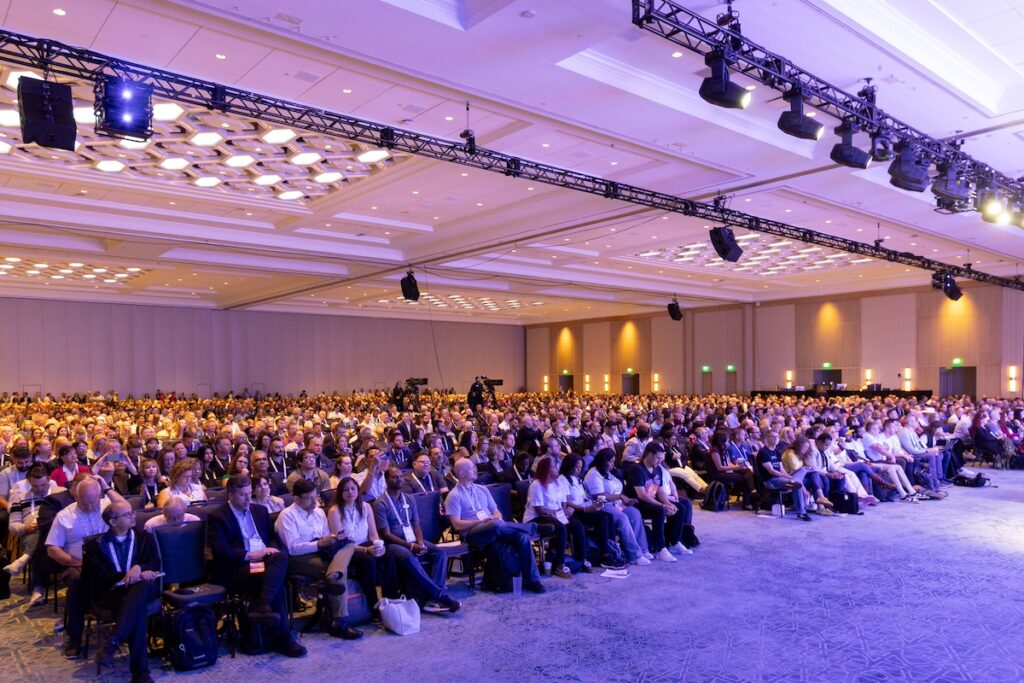

Monday’s Keynote Program marked the official kick-off to Community Summit North America 2025, where attendees heard from Microsoft leaders on the impact of artificial intelligence across the Microsoft stack and received news of the “Learners” platform, which is now available to the broader community.
Introducing the Learners Platform
The Learners Platform is a new community connection tool designed to bring the community together both in-person and online. Pam Misialek, VP, Community Director, Dynamic Communities, discussed the platform’s key features, including:
- A single sign-on environment
- Access to MVP insights, tutorials, and AI content
- Ability to view recorded Summit content online
- Local, regional, and national event connections
- Ability to connect with community leaders
“What’s great about this platform is it gives us the ability to do whatever content we need as a group,” she explained.
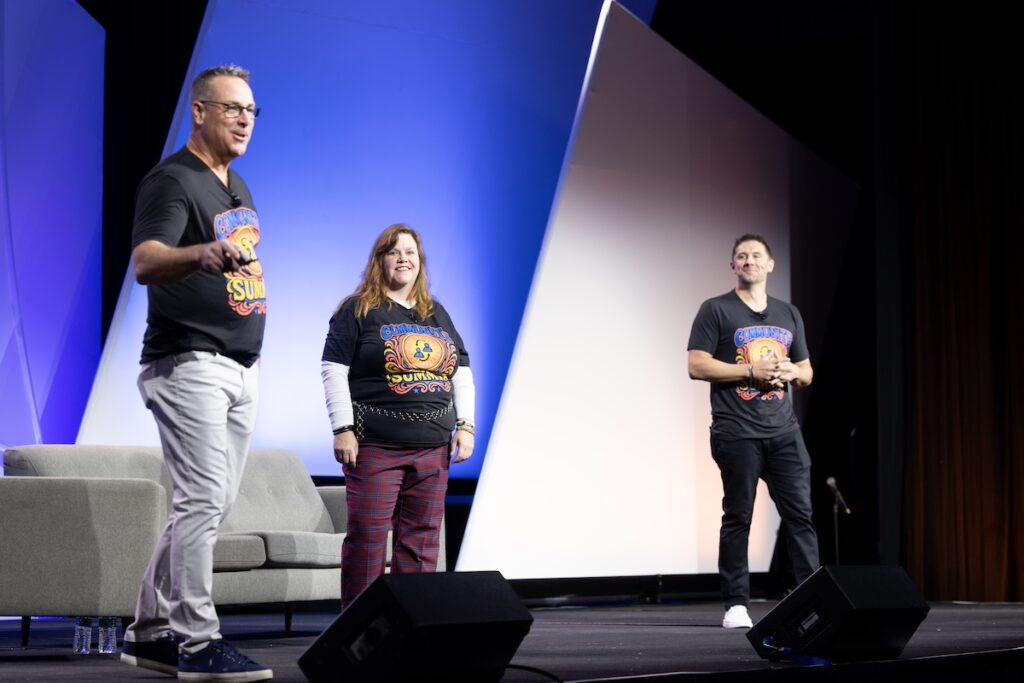
Learners aims to help community members connect, learn, and explore content tailored to their needs, whether they’re new to the community or experienced professionals.
Microsoft Leaders Define AI’s Impact on AI Business Solutions
Microsoft leaders Georg Glantschnig, CVP, Microsoft Dynamics 365 Agentic ERP Applications, Mike Morton, VP, Dynamics 365 Business Central & SMB Business Apps, and Alan Ross, Head of Product, Dynamics 365 Customer Service, Experiences + Devices Engineering, discussed AI’s impacts on Dynamics 365 Finance & Supply Chain Management (F&SCM), Dynamics 365 Business Central, and Dynamics 365 Customer Experience.
Notably, LLMs have had the fastest adoption rate ever, reaching over 100 million users in just three months, compared to the adoption of mobile phones, for example, which took 16 years, illustrating the impact of AI on the workforce.
Finance & Supply Chain Management
Glantschnig began by highlighting statistics relating to AI and agentic adoption, specifically:
- AI is outperforming human baseline level by 87% in last 3 months
- 80% of the workforce doesn’t have enough time and energy to get work done
- 82% of leaders are confident they’ll invest digital workers (AI) in the next 18 months
“We feel [that] agents, they will transform basically how work gets done in a company, and I think this is very much aligned with Microsoft’s mission statement to empower every person, every company on the planet, to achieve more,” noted Glantschnig, highlighting the impact of agentic AI on the workforce.
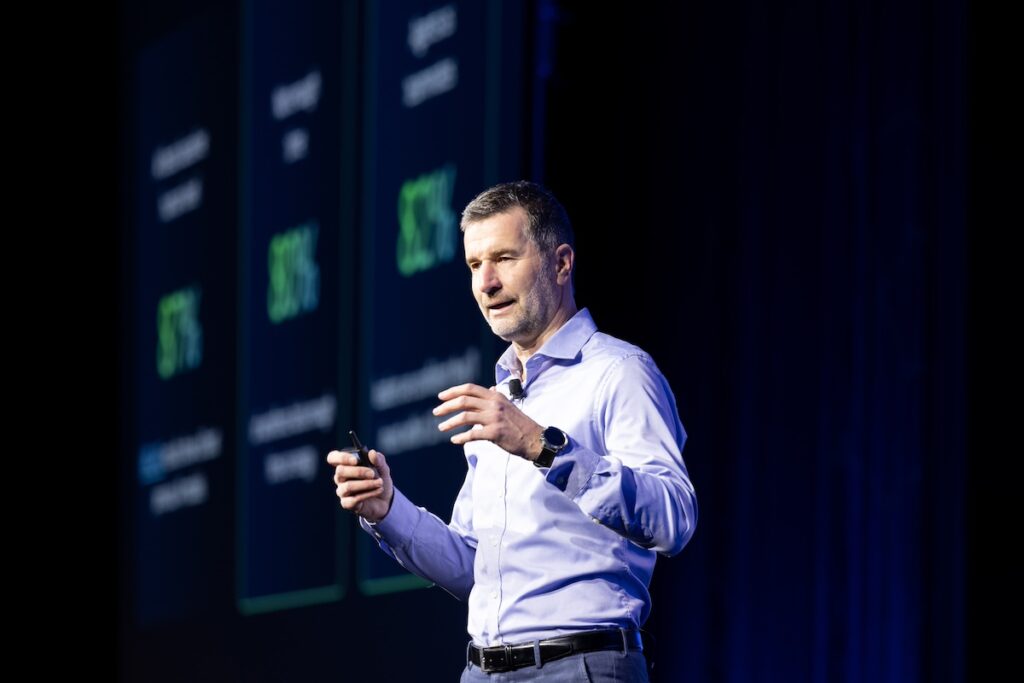
He also introduced the Model Context Protocol (MCP), explaining that it serves two key functions: First, it acts as a translator so agents can understand different system records, and second, it ensures agents use the right data and tools for specific tasks.
Instead of agents randomly calling AI systems, MCP helps guide agents to execute tasks efficiently. This protocol allows users, creators, and partners to build their own agents that can communicate with backend systems, creating a “flywheel for the autonomous enterprise.”
Glantschnig also demoed the Expense Agent in F&SCM and showcased the capabilities of Finance in Microsoft 365 Copilot before defining the team’s investment areas:
- Fundamentals & Security
- Acceleration of Agents
- Portfolio Maturity
Business Central
Morton discussed Business Central, Microsoft’s ERP solution designed for small and medium organizations, emphasizing its “all-in-one” approach that includes finance, supply chain, manufacturing, projects, operations, sales, and service. He highlighted the product’s ease of deployment and extensive app ecosystem, with over 7,000 solutions available.
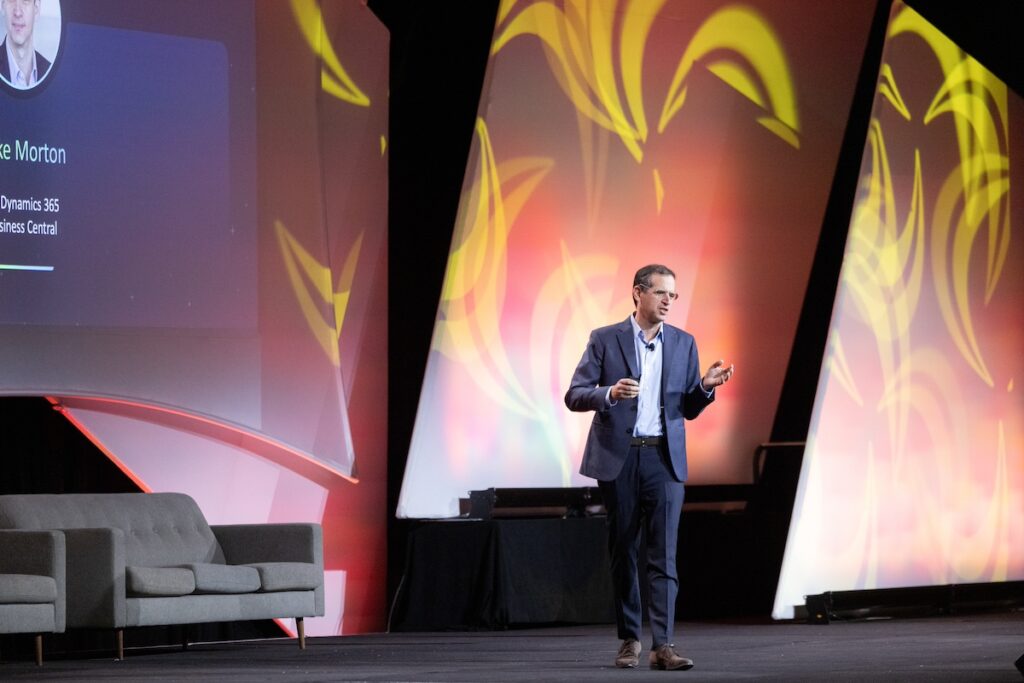
During his segment, he introduced two key AI-powered agents: a Sales Order agent and the Payables agent. The Sales Order agent automates handling email orders by analyzing inventory, item attributes, and customer requests. As Morton explained, “AI really can do an amazing thing with these types of scenarios,” showing how the agent helps draft responses, suggest alternatives, and streamline the sales process while keeping humans in control of final decisions.
Customer Experience
Ross discussed the challenges customers face when trying to implement AI, noting that many organizations struggle with complex technology stacks involving multiple cloud and data providers. Microsoft offers a unique, integrated solution that brings together cloud, data platform, channels, and AI into a unified system; this integrated approach enables teams to deliver customer experiences more efficiently, reducing integration complexity and cost while increasing the speed of innovation.
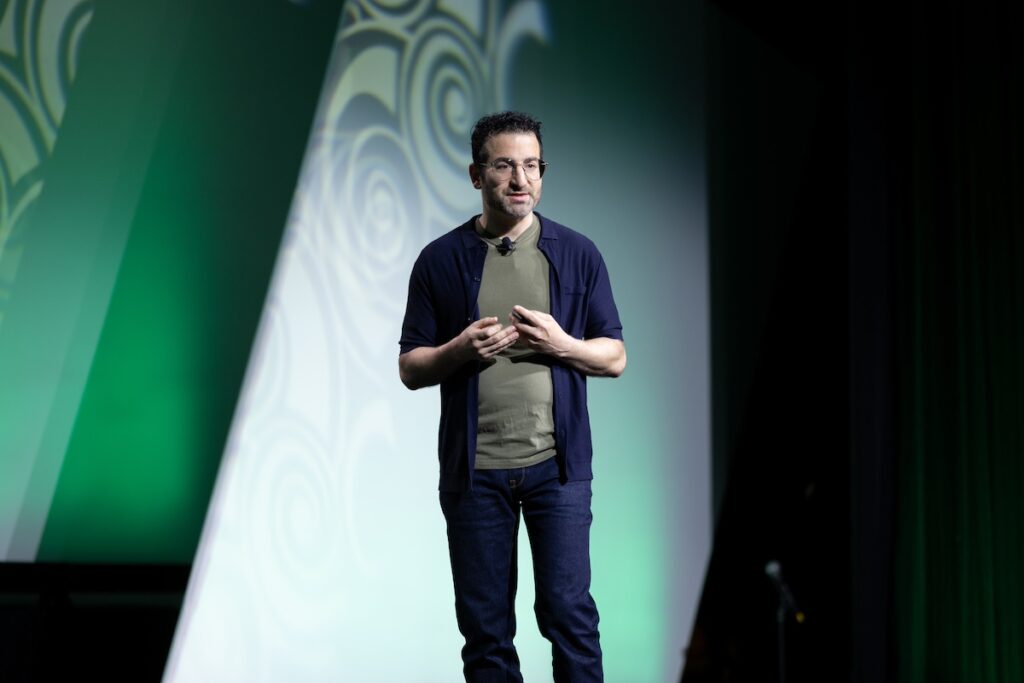
The Quality Evaluation agent for Dynamics 365 Customer Service, demonstrated by Ross during the Keynote, revolutionizes service quality assessment by analyzing cases and conversations at scale. Further, the agent evaluates interactions against standards like empathy, clarity, and effectiveness, and can generate evaluation summaries, quality scores, and recommendations. These capabilities allow supervisors to quickly identify trends and areas for improvement across their service operations.
Next, Ross showcased Microsoft’s integration of telephony features with Dynamics 365, introducing phone system capabilities through Teams, which connect the “front office and the back office.” He also discussed the Voice agent, demonstrating advanced speech recognition and latency optimization.
He concluded by stating, “While these examples show the powerful portfolio, our customers are not limited by it. We support an open ecosystem of data and tools, meeting our customers where they are. While we are a complete customer experience stack, covering service, sales and marketing, we also deeply integrate with customers preferred vendors.”