RSM VIP Frontier Day: Frontier Roundtable — Personalizing the AI Journey

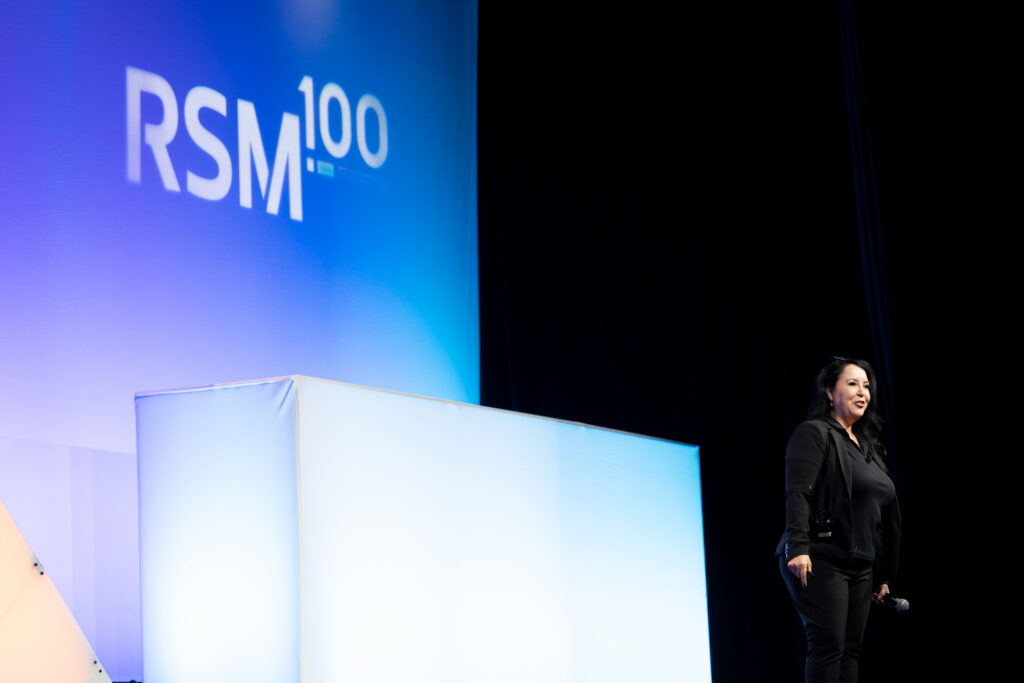

One standout feature of the inaugural VIP Customer Frontier Day led by RSM was its creativity. The RSM team aimed to create an interactive, immersive customer experience, and the Frontier Roundtable, Personalizing the AI Journey, led by Tracey Kelly, Executive Director, Lighting Co-Innovation Program at RSM, really brought that vision to life.
Kelly opened the session with an interactive game, inviting attendees to scan a QR code on screen and participate. Instead of a traditional roundtable-style presentation, she opened the floor and posed questions to the room, giving participants up to 10 minutes to discuss their answers around the table. Responses appeared live on screen, creating a shared view of the ideas, experiences, and perspectives in the room.
The format flipped the discussion, putting the customer at the center of the conversation. The focus was on building the AI frontier from the customer’s perspective — a customer-first approach that echoed the message Mike Gillis, RSM Partner/Principal, shared earlier in the day.
What’s in Your Saddlebag?
One of the opening questions asked participants what they had in their saddlebag — the knowledge, experience, tools, and ideas they already possessed that could help others. Responses appeared on screen in real time, while attendees shared their best ideas live on the microphone.
The roundtable format put over 100 attendees at different tables with an RSM representative and encouraged participants to learn from one another rather than listen to a speaker. It backed the idea that everyone has something valuable to contribute, regardless of where they are on their AI journey.
Identifying the Biggest Blockers
The next discussion tackled a key question: What are your biggest blockers to adopting AI? Another ten-minute conversation brought practical challenges and different perspectives to the surface.
Andrew Matkin, Principal Software Architect on Microsoft’s Copilot Studio, and Dewain Robinson, VP of AI Analysis & Research at Dynamic Communities, also joined the discussion, allowing attendees to put technical questions directly to them.
An important message was that the biggest challenge is often not the technology itself, but human change management. When asked where to start, the message from the experts in the room was simple: start. But, begin with the problem you’re trying to solve, rather than the technology you want to use.
By identifying the challenge first, organizations can focus on where AI can make a meaningful difference, rather than adopting technology for its own sake.
Tackling AI Shame
The discussion also explored AI shame —the reluctance some people feel about admitting they don’t know everything and that they use AI to help them work through challenges.
Why not turn that around and make it a badge of honor?
The message was clear: Nobody needs to know everything. Instead, people should feel comfortable experimenting with AI, asking questions, and using it as a tool to improve their work and output quality.
Creating a culture where people can learn openly, without fear of judgment, is an important step towards encouraging wider AI adoption.
Where Are We Seeing Real Value From AI?
The final discussion topic explored where attendees were already seeing genuine value from AI. A live word cloud captured their responses, with participants sharing examples of what they had tried, achieved, and learned.
This brought the session back to its central theme: learning from real experiences, sharing ideas, and identifying practical opportunities to make AI useful. By drawing on examples from across the room, attendees could see how others were applying AI and consider how similar approaches might work in their own organizations.
Final Thought
The Frontier Roundtable showed the importance of personalizing the AI journey and putting people and customers first. By starting with real challenges, sharing knowledge, and embracing experimentation, organizations can move beyond the “hype” and focus on what really matters: creating meaningful value through AI.