Microsoft Shares an ‘Agent-Ready’ Roadmap for Dynamics 365 Finance & Supply Chain

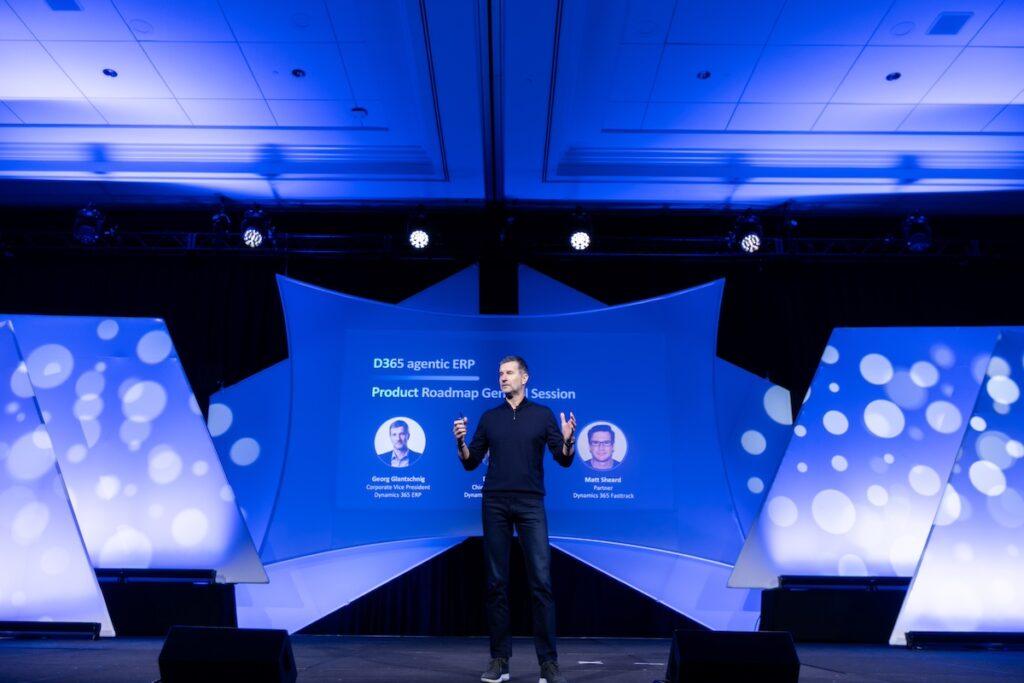

On Tuesday, Microsoft leaders shared how Dynamics 365 Finance & Supply Chain Management (F&SCM) is evolving through AI, automation, and product integration. The D365 Finance & Supply Chain Product Roadmap Session, featuring Georg Glantschnig, Corporate Vice President, Microsoft Dynamics 365 Agentic ERP Applications at Microsoft, Dan Gittler, Chief Product Officer, Microsoft, and Matt Sheard, Partner, Microsoft Dynamics 365 Customer Experience, Microsoft, focused on how Microsoft’s ERP portfolio is entering what is described as an “agent-ready era.”
A Platform Built for AI Agents
Glantschnig began the session by highlighting Microsoft’s momentum and growing leadership position in Gartner and Forrester rankings. He referenced the 215 new capabilities in the last update and a surge in active users across Finance and Supply Chain.
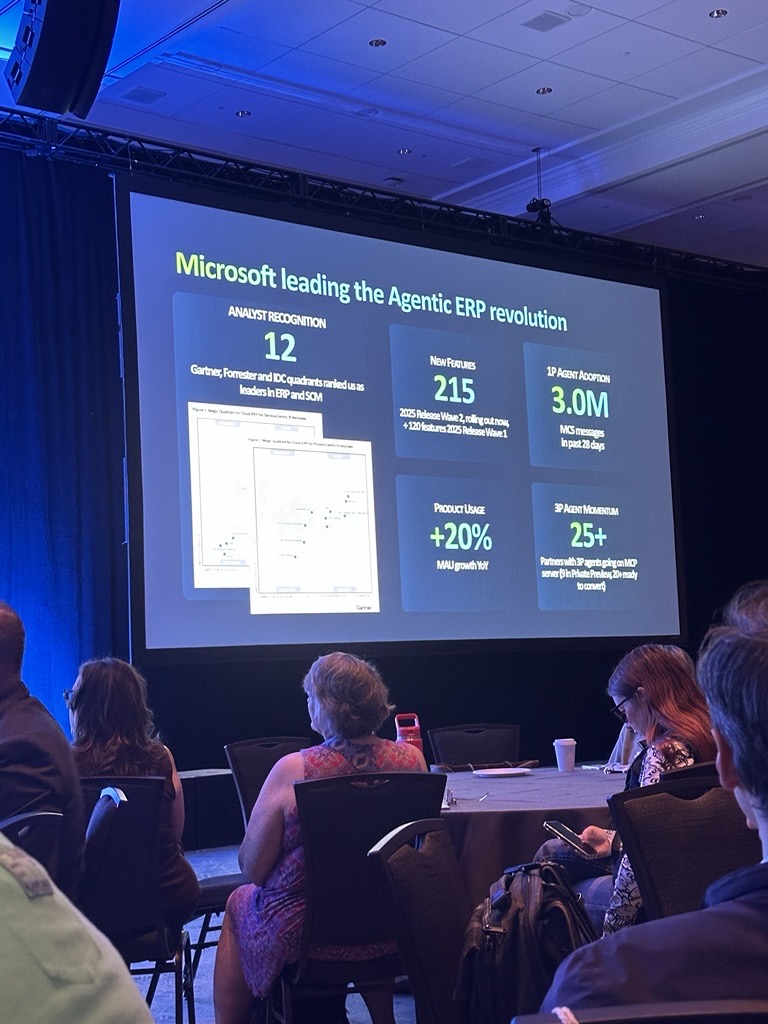
He also described the next phase of ERP as “agentic work,” a shift from traditional process automation toward AI agents that can reason, act, and learn within secure, compliant systems. Microsoft’s multi-layer architecture (combining Copilot, cloud, and MCP) leads this transformation.
He previewed a catalog of AI agents supporting everything from employee onboarding and demand forecasting to procurement and finance reconciliation. “Our goal is to make Dynamics 365 the most agent-ready business platform available.”
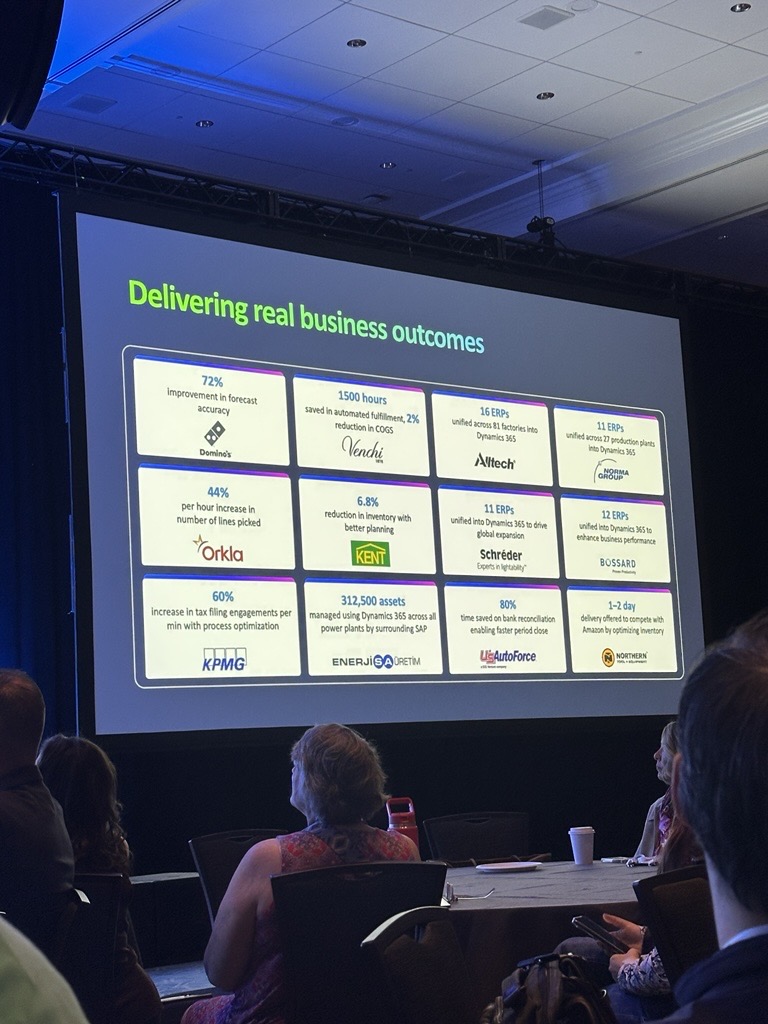
Glantschnig emphasized that Microsoft’s ERP portfolio remains vast and showcased customer examples such as Domino’s Pizza and major European retailers who’ve witnessed notable business outcomes through the agent-driven platform.
Finance and HR Workflows
Glantschnig referenced several updates in Dynamics 365 Finance designed to simplify complex accounting and HR processes.
He highlighted the new journal framework, which allows finance teams to manage entries across multiple legal entities within one Excel template. Users can validate, approve, and post journals directly from Dynamics, with improved visibility, error tracking, and audit history.
Another addition is the Account Reconciliation Agent, an AI-driven tool that automates reconciliation between ledgers and subledgers. The agent identifies exceptions, proposes adjustments, and allows one-click correction or reversal. “It transforms a manual, error-prone task into a guided, automated process,” Glantschnig said.
For HR professionals, Microsoft has expanded recruiting automation within Dynamics 365 HR, adding the ability to publish job postings directly to external boards and bulk-upload resumes. AI then generates candidate profiles and assessments automatically, as shown in a video demo.
Project and Field Operations
Gittler then detailed progress in Microsoft’s service-centric ERP solutions, Project Operations and Field Service.
For project-based organizations, Gittler outlined deeper integration across sales, planning, delivery, and finance. Updates include:
- Expense and Time Entry agents that automate expense categorization and time tracking
- Support for internal investment projects
- Enhanced approval workflows that allow project-specific policy configurations
In Field Service, Microsoft is improving worker experiences through Teams integration, faster scheduling, and a modernized interface.
Gittler also previewed the new integration between Field Service and Project Operations, which connects work orders, labor, and material costs across both systems while syncing financial data directly into Supply Chain Management.
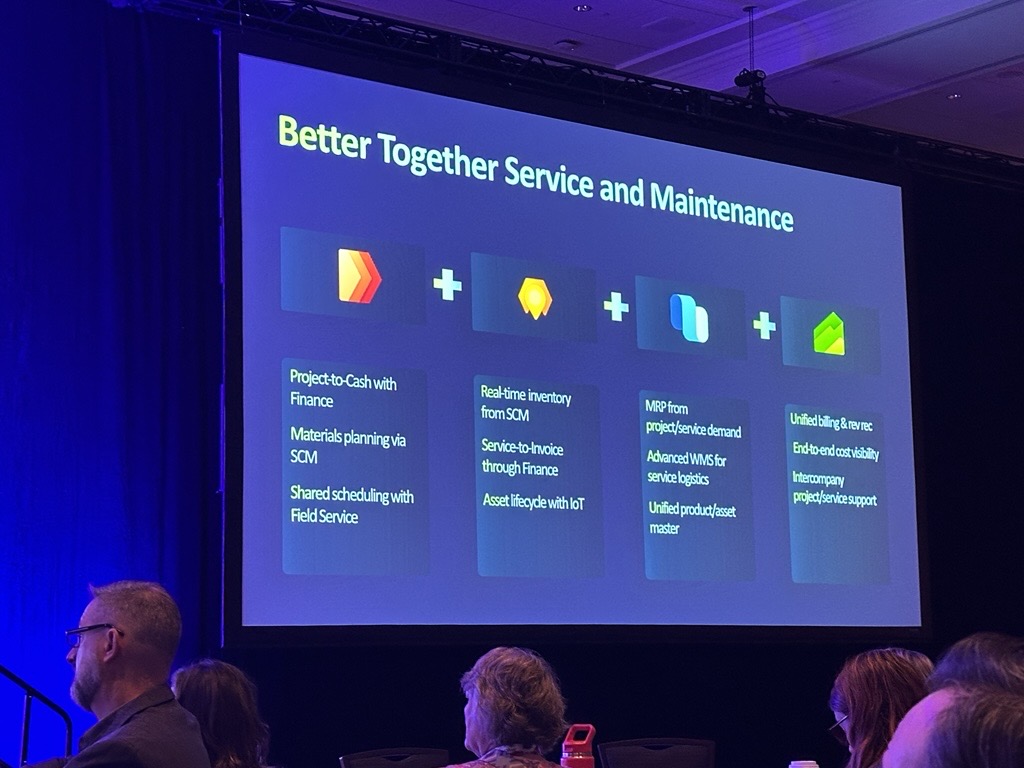
“The lines between applications are blurring. We’re bringing these products together so projects, fieldwork, and financials operate as one,” he said.
AI in Supply Chain
Sheard closed the session with updates spanning Supply Chain Management, Commerce, and customer adoption.
Sheard introduced a redesigned AI-driven demand planning module that uses external signals to improve forecast accuracy.
He showcased a rebuilt Warehouse Management mobile app, rewritten in React Native for better performance, offline reliability, and accessibility. The new version offers faster barcode scanning, improved layouts, and personalization options, improving the experience for warehouse workers.

Another highlight was the Supplier Communications Agent, which automates email exchanges between purchasing managers and vendors. The agent reads incoming messages, updates purchase orders, and drafts reminders for unconfirmed deliveries.
He also shared customer results, including Lifetime Products, which reduced procurement workload by 20%, and US Ventures, which minimized financial reconciliation time by 80% using agents.
Deploying Agents
Sheard concluded by outlining Microsoft’s Customer Experience Program, which provides implementation support through FastTrack architects and a new Forward Deployed Engineering model. These teams work directly with customers to deploy first-party agents or build custom solutions using Copilot Studio.
The future of ERP is about “systems that think, act, and collaborate alongside you,” he noted.