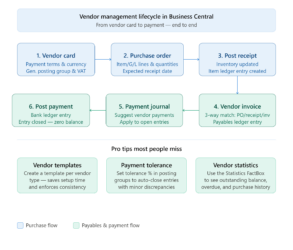
::Vendor management is far more than maintaining supplier records and processing invoices. In Microsoft Dynamics 365 Business Central (BC), organizations have access to a wide range of features that can help streamline procurement processes, improve supplier relationships, and enhance financial control. The real question is whether businesses are using these capabilities to their full potential.
One of the most important aspects of effective vendor management is maintaining accurate vendor master data. Business Central allows companies to centralize vendor information, including contact details, payment terms, shipping information, tax details, and transaction history. Keeping this data updated ensures smoother procurement operations and reduces errors that can lead to delayed payments or order discrepancies.
Another area where many organizations fall short is vendor performance monitoring. Business Central provides visibility into purchasing history, delivery timelines, and spending patterns. By analyzing this information regularly, procurement teams can identify high-performing suppliers, negotiate better terms, and reduce dependency on vendors that consistently fail to meet expectations. Data-driven vendor evaluations can significantly improve supply chain reliability and operational efficiency.
Automation is another key capability that often remains underutilized. Business Central can automate purchase approvals, invoice processing, and payment workflows. Automating routine tasks not only reduces administrative workload but also minimizes the risk of human error. Employees can then focus on strategic procurement activities rather than manual data entry and repetitive processes.
Financial management is closely tied to vendor management. Business Central enables businesses to track outstanding balances, payment schedules, discounts, and credit limits. Organizations that actively monitor these metrics can improve cash flow management while maintaining positive supplier relationships. Taking advantage of early-payment discounts and avoiding late-payment penalties can have a direct impact on profitability.
Vendor categorization is another best practice that can unlock additional value. Segmenting vendors based on factors such as spend volume, strategic importance, geographic location, or product category helps organizations make more informed sourcing decisions. Business Central supports this level of organization, making it easier to manage procurement strategies and vendor relationships effectively.
Collaboration between procurement and finance teams is equally important. Since Business Central integrates purchasing and financial data within a single platform, stakeholders gain a unified view of supplier transactions and commitments. This transparency improves decision-making and ensures better alignment between purchasing objectives and financial goals.
Additionally, organizations should regularly review purchasing trends and supplier performance reports available in Business Central. These insights can reveal opportunities for cost optimization, supplier consolidation, and process improvement. Companies that proactively use reporting and analytics capabilities are often better positioned to respond to changing market conditions and supply chain challenges.