Business Central or SAP B1? A Manufacturer’s Quick Guide

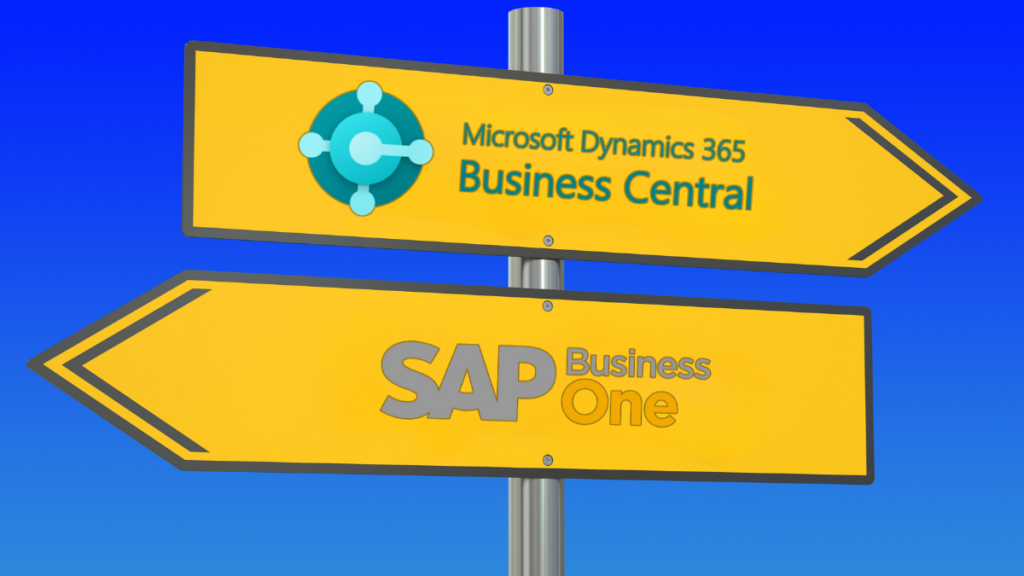
When it comes to ERP solutions for small to midsized manufacturers, two names are often mentioned: Microsoft Dynamics 365 Business Central and SAP Business One. On the surface, both offer a wide range of features and strong vendor support. But once you scratch beneath the surface, the differences start to become more significant – especially for manufacturers planning their long-term strategy.
While feature lists and pricing tables are important, they don’t always tell the whole story. In this article, we’ll look at five considerations that manufacturers often overlook when evaluating Business Central vs SAP Business One.
For a more detailed comparison, read our full article: Business Central vs SAP Business One.
1. Cloud-First vs Cloud-Capable
Not all cloud ERPs are created equal. SAP Business One is traditionally an on-premise solution with optional cloud hosting. This might check the “cloud” box on a checklist, but it lacks the advantages of cloud-native platforms like Business Central.
A cloud-native ERP offers:
- Seamless, automated upgrades (with no downtime)
- Native access across devices (such as mobile and tablet)
- A serverless infrastructure hosted in the cloud
- An expanding ecosystem of embedded apps via a cloud store
By contrast, SAP Business One in the cloud is delivered as an on-prem software installed in a cloud server. This means it’s not serverless (it needs a server, even if you don’t see it), is not automatically updated, and has challenges running on mobile devices (it can’t use one common interface across many devices). This can translate into higher maintenance costs and slower innovation cycles.
2. Manufacturing Functionality
Out of the box, Business Central Premium includes a comprehensive set of manufacturing tools—assembly management, production orders, capacity planning, and more. For manufacturers, this native functionality streamlines operations and reduces reliance on third-party add-ons.
SAP Business One, however, often requires additional modules (such as the Supply Chain Management or Fulfillment add-ons) to achieve equivalent functionality. These add-ons can increase both licensing and implementation costs, and may require third-party support for future updates.
Both products often add extra features with their “addon vendor” partners, but for Business Central that is as easy as visiting the cloud app store and clicking install. For SAP B1 installing addons is not as easy and seamless.
Related Reading: Compare Business Central’s Manufacturing Capabilities

3. Customization vs Complexity
Both Business Central and SAP Business One offer deep customization – but how they achieve it is a little different. SAP B1 has some add-ons (not nearly as many as Business Central) and allows extensive backend development, but that often requires technical consultants to manage and maintain.
Business Central takes a more modular, low-code approach with over 7,000 extensions through Microsoft AppSource. These pre-built apps allow for a more plug-and-play functionality without touching the core code, reducing technical debt and upgrade risk.
That said, Business Central can still be customized. Manufacturers need to be strategic – prioritize apps and extensions that solve specific needs without reinventing the wheel.
4. Pricing & Partner Experience
One of the biggest pain points when evaluating SAP B1 is that the pricing is opaque. Licensing, cloud hosting, and implementation fees are often handled by SAP partners and can vary depending on the deployment method and geography.
In contrast, Microsoft publishes and regularly updates pricing for Business Central Essentials and Premium, including hosting on Azure. They have already been vocal of a small price increase for Business Central, which will be happening in October 2025. Those that have purchased their licenses before, get the discounted licenses for the length of the term that they sign. While implementation pricing still varies by partner, there are partners (like Sabre Limited) that offer fixed fee implementations.
Related Reading: Business Central Pricing Guide
5. Platform Agility
Microsoft is investing heavily in the Dynamics 365 platform—especially in AI, Copilot functionality, and deep integration across the Microsoft ecosystem. With two major updates per year and continuous enhancements through AppSource, Business Central users are rarely left behind.
SAP Business One has a slower innovation cycle and fewer out-of-the-box integrations with other cloud apps. While SAP S/4HANA sees cutting-edge innovation, B1 evolves more slowly, which can be a disadvantage for fast-growing manufacturers seeking agility.
Final Thoughts
ERP selection is a strategic decision—especially for manufacturers. While both Business Central and SAP Business One are capable platforms, Business Central’s cloud-native design, transparent pricing, and built-in manufacturing functionality make it a strong choice for forward-thinking companies.
That doesn’t mean SAP B1 is the wrong choice—it depends on your business priorities. But in today’s fast-changing manufacturing landscape, agility, integration, and long-term scalability are often the deciding factors. If you want to learn even more, read this comprehensive article about Business Central vs SAP B1.
If you are considering SAP Business One because you’ve heard of SAP and are excited to access a top-tier ERP system, you may be disappointed to realize that Business One is a wholly separate ERP from SAP S/4 HANA. The Business One application is not the same as the “Big” SAP, and doesn’t receive the same amount of investment and attention.
If you’re exploring ERP options and want expert insight tailored to manufacturing, consider booking a one-on-one call with Rob Jolliffe, president of Sabre Limited.