Design Patterns for Industry-Specific AI Agents: Turning General-Purpose Assistants into Domain Experts with OpenClaw and Microsoft

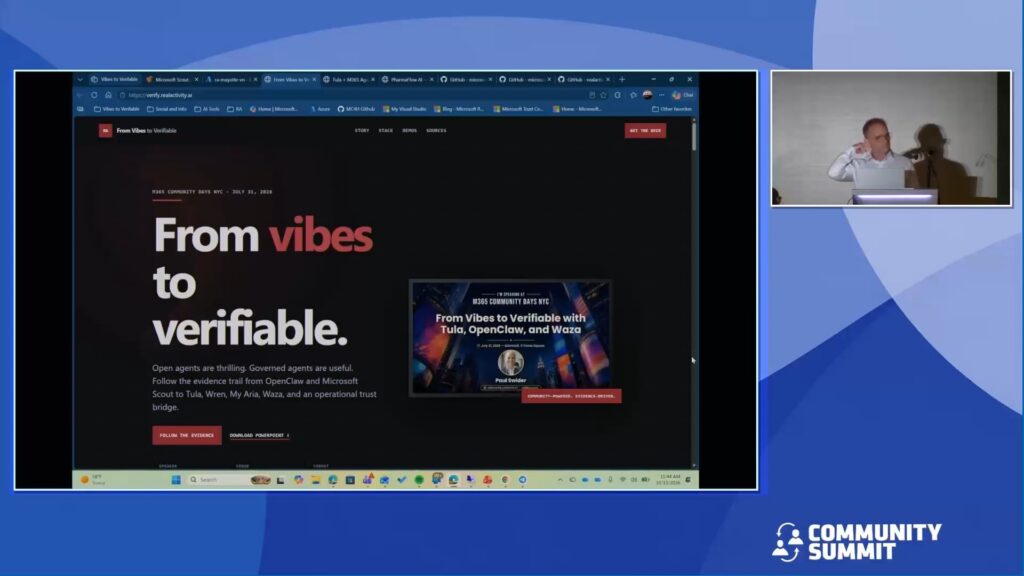
Session Overview: General-purpose AI agents are impressive out of the box, but real business value comes when they understand your industry. This session breaks down the architecture and skill design patterns behind building industry-specific AI agents on OpenClaw, integrated with the Microsoft ecosystem. Using Tula, an open-source health intelligence skill collection, as the primary case study, you’ll see exactly how modular skill configurations, domain knowledge layering, and data source integrations transform a generic assistant into a specialized industry expert.
The patterns are universal. Whether your vertical is healthcare, manufacturing, financial services, or public sector, the same design principles apply.
We’ll walk through real code and configurations, not slides. You’ll see how Tula’s health intelligence skills are structured, why those architectural decisions were made, and how to adapt the same patterns to your own industry.
Learning Objectives:
- Understand the AI skill architecture patterns. Composition, configuration layering, and context management, that transform a general-purpose AI agent into an industry-specific domain expert, applicable across any vertical.
- Learn how to integrate industry-specific AI agent skills with Microsoft Teams, Power Platform, and Azure services for delivery, workflow orchestration, and enterprise data connectivity.
- Apply a repeatable framework for encoding domain constraints, like regulatory compliance, data privacy, accuracy guardrails, into AI agent skill configurations, using healthcare (Tula) as the worked example.
Speakers: Paul Swider
Recorded at: Community Summit NA 2026
Type: Education Session
Ability Level: 301 – Advanced
Primary Product: Agents & Copilot
Tracks: Artificial Intelligence (AI), Automation, Technical (Development)
Terms: All rights reserved by the speaker, Community Summit NA, and Dynamic Communities and cannot be reproduced or distributed without express written consent by the speaker and Dynamic Communities.