
Dynamics F/SCM
Dynamics F/SCM
Organizer:
- JOSE Organized by
-
-

Why real estate must bridge the cultural gap with technology
-
Why real estate must bridge the cultural gap with technology
Recently, I was part of discussions around Microsoft Dynamics and real estate systems. Many partners and industry people were talking about where things are heading.
One thing was very clear. Technology is moving very fast.
Microsoft’s platform, especially Dynamics 365, is growing quickly. AI is now built into many tools. Automation is becoming normal. Reports are smarter. Forecasting is faster. Everything is more connected than before.
But while all this is happening, real estate companies are still moving carefully.
And that is where the gap starts.
Real estate is careful. Technology keeps pushing.
Real estate businesses do not like risk. That makes sense. They manage large assets. Long term investments. Compliance matters. Stability matters more than speed.
Technology companies think differently. They release updates often. They test new ideas. They improve products step by step. For them, change is normal.
In many conversations, I noticed something interesting. Tech providers were talking about AI, automation, and digital workflows. But real estate leaders were more focused on keeping their current systems stable. They wanted to make sure staff were comfortable. They were unsure about adopting more new tools.
That hesitation is real.
Adoption is still the real problem
The issue is not the software anymore.
Today’s systems are strong. Dynamics 365 can handle finance, leasing, asset management, reporting, and much more. The tools are there.
But many projects struggle after implementation.
Why?
Because people are not fully confident using the system. Processes are not aligned properly. Training is sometimes rushed. Change feels uncomfortable.
Even a powerful system will not work well if teams go back to old habits.
This is where many companies get stuck.
So how do we fix it?
From what I see, three things matter most.
First, stabilise what you already have. Make sure your current processes are clean and structured before adding new features.
Second, invest in your people. Spend time on proper training. Support them after go live. Let them ask questions. Let them make mistakes.
Third, allow small experiments. Do not force big changes all at once. Try new workflows in steps. Build confidence slowly.
Technology is not the main barrier anymore.
Culture is.
Real estate does not need to move as fast as tech companies. But it cannot stay too far behind either.
The opportunity is there. The tools are ready.
The question is simple.
Is the industry ready to move with them?
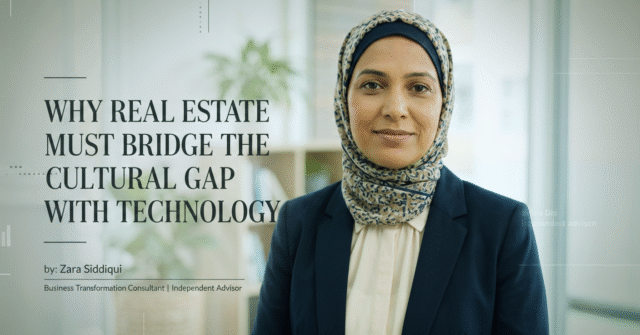
To discuss this further, please contact Zara Siddiqui, Business Transformation Consultant | Independent Advisor



Log in to reply.