

Dynamics F/SCM
Dynamics F/SCM
Organizer:
- JOSE Organized by
-
-

Why does Master Planning always ignore demand forecasts dated in the past?
-
Why does Master Planning always ignore demand forecasts dated in the past?
I’m raising a question that has been raised before in the hope that somebody can give me a sensible answer.
The question is: Why does D365FO Master Planning always ignore demand forecasts dated in the past? I was hoping that this would be resolved in Planning Optimization, but unfortunately it hasn’t.
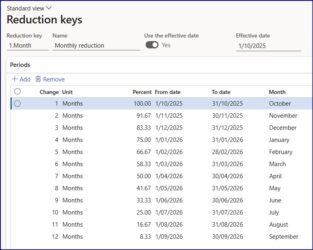
I can understand why such forecasts are sometimes ignored – I just don’t know why they are always ignored. In particular, when the ‘Transactions – Reduction key’ forecast consumption method is used, and the Reduction key that’s used has an Effective date of the 1st of the current month (see the attached example), I believe forecasts dated prior to today, but in the current month, must be included when either Master Planning or Planning Optimization is run. I would therefore argue that it’s a bug that they aren’t being included.
I know you can use a period key to split a monthly forecast into weekly (or even daily) forecasts, but this is only a workaround and doesn’t really solve the problem.
A common response to this question is that any forecasts dated in the past should be ignored because they would have been consumed if they were accurate forecasts. I would argue that this requires forecasts to be 100% accurate, so is impractical. Also, even if the forecast was 100% accurate, a slight delay in shipping a sales order that previously consumed all or part of a past forecast could cause it to consume a later forecast, which will increase a planned order quantity for no reason.
Do you have an opinion on this?

Log in to reply.