
If anyone is thinking or in the process of a 2012 upgrade (we are currently upgrading from 2012 R1 to R3), please join the Application Lifecycle Management SIG community. I’ve started a journal to document my company’s upgrade and will be consolidating some of the SIG posts there. My blog url is http://www.erprojecttips.com.
—————————— GG Rowe, PMP Oregon Chapter Leader Chapter url: http://www.axug.com/portland IT Applications Manager Planar Systems, Inc. Beaverton, OR 97006 USA ——————————
2. Upgrading from RTM to R3 means you have to split the single RTM database into two databases. This extends the project so plan accordingly (see TechNet article above). AX2012 R2 on have the two-database architecture.
3. Become well versed in AX2012 System Requirements. The requirements are periodically updated (e.g. between December 2016 and January 2017 there was an update).
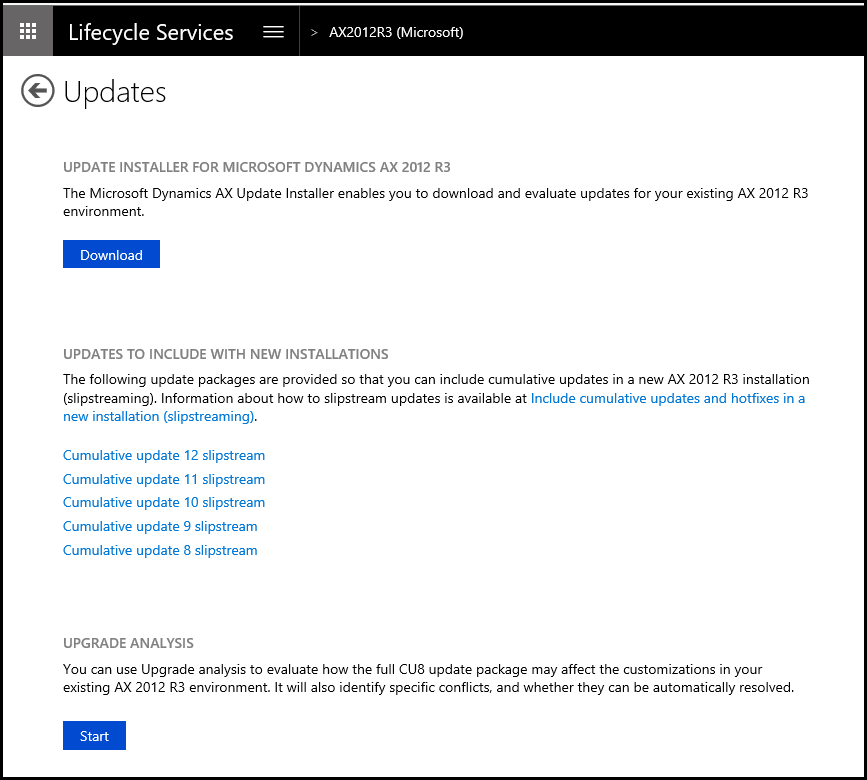
4. Go to LCS and pull a Slipstream version of R3 CU12 (for example). The Slipstream versions may contain patches to the upgrade process. An upgrade from RTM to R3, brief stop, then on to CU12 will be more difficult. Learn about LCS (https://lcs.dynamics.com/v2).
5. Determine if you want to upgrade in place or upgrade a production copy and cut over.
6. Install the latest kernel and stay updated on kernels.
7. AX2012 R3 contains WAX/TRAX (new warehousing functionality) but there is not an upgrade. Most customers upgrade to R3, stick with legacy WMS I & II, then consider an upgrade to WAX/TRAX (drain all inventory, open transactions, Inventory Close, Consistency Check, enable WAX/TRAX, bring it all back in, etc.).
Thanks…..Dave
—————————— Dave Phillips MSFT Senior PFE Microsoft Fargo ND —————————— ——————————————-
Please note:
This action will also remove this member from your connections and send a report to the site admin.
Please allow a few minutes for this process to complete.
Report
You have already reported this .
Welcome to our new site!
Here you will find a wealth of information created for peopleĀ that are on a mission to redefine business models with cloud techinologies, AI, automation, low code / no code applications, data, security & more to compete in the Acceleration Economy!