
When tracking changes to posting transactions in NAV, is there a ‘best practice’ for what most accurately defines the transaction – for example, if I want to track purchase receipts – does it make more sense to trigger all changes to the ‘Quantity Received’ field on the Purchase Line(39), or instead look for records inserted in the Purch. Rcpt. Header(120)/Purch. Rcpt. Line (121)? Is one way preferred over the other?Ā
The reason I ask is I have occasionally seen occurrences where the order of transactions during a final receive/invoice/close operation of a PO causes the change of Quantity Received not to be captured before the purchase line is deleted as part of the close operation. This is making me think the more accurate data to capture would be the creation of new purchase receipts, as this always happens regardless of the state of the PO?
I am using Fastpath to track changes in NAV 2013 R2, but the same question could be applied to using the Change Log or any other tracking tool in NAV.Ā
—————————— Oliver Leslie HOLLY HUNT Enterprises Chicago IL ——————————
Eduardo Diaz
Member
December 13, 2018 at 9:42 AM
Hi Olly,
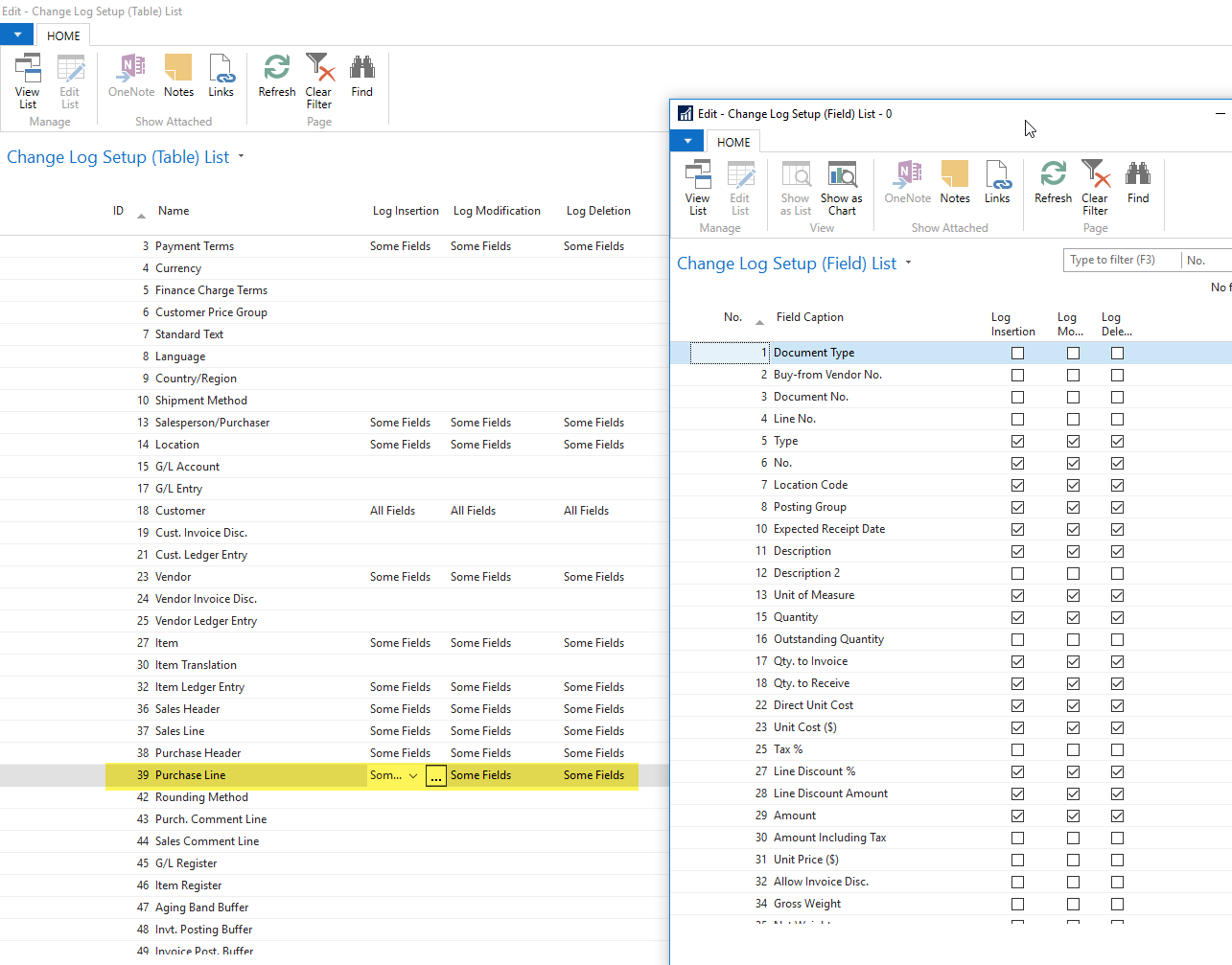
Standard NAV doesn’t let you make changes to the “Purch. Rcpt. Line” so my suggestion is to track changes at the “Purchase Line” table. This will help you answer the typical 5 “W” questions. Best practice is to enable only the fields that are important to your business. Enabling all fields will create too many transactions which can compromise performance. Here is a screenshot of my Change Log Setup.
—————————— Eduardo Diaz IT Director Minequip Corp. Miami FL —————————— ——————————————-
Please note:
This action will also remove this member from your connections and send a report to the site admin.
Please allow a few minutes for this process to complete.

Report
You have already reported this .
Welcome to our new site!
Here you will find a wealth of information created for peopleĀ that are on a mission to redefine business models with cloud techinologies, AI, automation, low code / no code applications, data, security & more to compete in the Acceleration Economy!