


Dynamics Business Central (NAV)
Public Group
Active a day ago
Experts:




NAV 2016 GL Consolidations & Business Units
-
NAV 2016 GL Consolidations & Business Units
Posted by Ronald L McVicar Jr on October 13, 2022 at 10:20 am-
We do various consolidations and with some accountant turn over they are asking if there is a reference or whitepaper which covers Business Unit Consolidations especially for a multi-tier organization
Consolidations were done in August not monthly. Like in August, and 30 to 300 all posted in there correct month but consolidations from 300 to 1000 all posted in August.
Is this how consolidations work. Is there a whitepaper that talks about this?
30 to 300 and 300 to 1000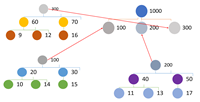
——————————
Ronald McVicar, IT Software Mgr
NSP (Quality Meats)
nspproteins.com
—————————— -

Jimmy Yu
MemberOctober 14, 2022 at 10:41 AM
Hi Ronald,There is no white paper on this. But there is lots of documentation on Microsoft’s site and you just have to search for it. Here’s what I found through a quick search Consolidate Data from Multiple Companies – Dynamics NAV App
I’m not entire sure what your numbers 30, 300, 1000 represent but I’ll try to help. In the Chart of Accounts, each account has a Consol. Debit Account reference and Consol. Credit Account reference. Those point to the parent company’s GL account. For example, GL 30 could reference Consol. Debit Account of 30 and Consol. Credit Account of 30. This will tell NAV that the debit and credit transactions will go to the parent company GL 30. However, you could have all the GL’s 30-39 go to parent GL 30 as well. I’ve seen both scenarios before.
Consolidation should occur monthly because NAV will summarize the transactions of the subsidiary so if you consolidate from June 1 to Aug 31, then you will have 1 set of transactions in the parent/consolidation company. Always consolidate with June 1 to June 30, etc.
NAV will also consolidate different currency companies as well so it’s important to understand the foreign exchange capabilities of NAV before attempting this.
I hope this helps.
——————————
Jimmy Yu
Enterprise Architect
Step Energy Services Inc
AB
——————————
——————————————- -
Jimmy,
Thanks and I appreciate your input, really, Yes, we have the Microsoft guidance on the Microsoft Dynamics NAV 2016 “Consolidate Companies” business functional guidance for consolidate companies. We have a guidance document for our accountants but it was dated and did not give some of this but did not provide the nuances of this process regarding currency, testing and the month to month such as you mention .——————————
Ronald McVicar, IT Software Mgr
NSP (Quality Meats)
nspproteins.com
——————————
——————————————- -
Jimmy Yu
MemberOctober 17, 2022 at 11:27 AM
Ronald,Let us know if there are more specific questions you need an answer to. The community is here to thelp.
——————————
Jimmy Yu
Enterprise Architect
Step Energy Services Inc
AB
——————————
——————————————- -
Jimmy,
Again thanks.So for Business Unit Consolidation (model) alway consolidate month to month (period to period) as you indicated “… Always consolidate with June 1 to June 30…”?
And don’t consolidate April to August as such doing a consolidation (process) with a date Grange to 4/1/2022 …. 8/31/2022. But do it one month at a time? 4/1…4/30/2022; then 5/1..5/31/2022, etc.?I was looking at the Microsoft Dynamics NAV 2016 “Consolidate Companies” business functional guidance for consolidate companies;
and did not see these kind of user guidance the Consolidation function in NAV required. Or am I missing something? I am not an accountant and this might be common sense, too.Thank you
——————————
Ronald McVicar, IT Software Mgr
NSP (Quality Meats)
nspproteins.com
——————————
——————————————- -
Jimmy Yu
MemberOctober 19, 2022 at 5:58 PM
Hi Ronald,
Yes, month by month, exactly as you indicated. I have experienced first hand of others, new to my company, have consolidated 1/1/2022..9/30/2022 and seen the effects. NAV/BC will zero out the previous entries (the amounts go from $xxx.xx to $0.00) and then writes new additional entries and attempts to write as few entries in the Consol Co as possible. From a reporting stand point, when you try to run reports for January, it will come up with zero. This is not mentioned in the documentation.
Regards,
——————————
Jimmy Yu
Enterprise Architect
Step Energy Services Inc
AB
——————————
——————————————- -
Why is it appropriate to do Business Unit (Multi-company) Consolidations Month to Month from a transactional company to a consolidation company? As apposed to lumpsum consolidation? So for company 7, 8, 9 (transactional) consolidating to company 10 (consolidation company) for Europe. And then Company 10 consolidating along with Company 11 (Eliminations) consolidating to 100. Along with Companies 1, 2, 3 (transactional) consolidating up to 20 (Consolidations) for Asian companies . And then 20 and 21 (Eliminations) consolidating to 100 for overall US GAAP Consolidation, etc..
Lumpsum by company (bottom to top) would be September for Jan thru September instead of month to month by company (bottom to top). Understanding that at the bottom it is transactional to Consolidation and closer to the top and at the top it is Consolidation to Consolidation.
Does Dynamics NAV 2016 work if you do a lumpsum or is really meant for Month to Month For Business Unit consolidations?
Jimmy or anyone else have thoughts on this? I think the answer simply is Month to Month but why?
——————————
Ronald McVicar, IT Software Mgr
NSP (Quality Meats)
nspproteins.com
——————————
——————————————- -
Jimmy Yu
MemberOctober 28, 2022 at 11:34 AM
Fantastic question Ronald. My new corporate reporting manager had the same question because the month-to-month consolidation created a huge OCI/CTA swing in Sept 2022 because of the FX change from CAD/USD that month. Now the auditors want us to explain why there is suddenly such a big swing compared to prior months. Even though the answer is simple, it’s FX, we still have to do the math to prove that NAV did not incorrectly post the OCI/CTA.Back to this question, why month to month and not lump sum annually. My answer is two fold. First, if you do lump sum for 9 months, you will not be able to run financials at the consolidation level in month 2, 3, 4, etc. You will only be able to produce consolidated financials in Dec or Sept but Feb would yield you no new results compared to Dec (depending on when year-end is).
I worked for a very large company once and if the business units did not provided monthly numbers to consolidate with, corporate couldn’t see any numbers, they would be blind. They did not have the system permissions to see each individual business units, nor did they have time to attempt to. Instead, we as a business unit had to make sure our numbers were clean and ready to be consolidated. Only then, could they consolidate and see the results of the full company and begin their analysis and preparation of financial statements.
I would be curious to see what others have to say on this topic. My stance/experience is purely from an accountant’s perspective.
——————————
Jimmy Yu
Enterprise Architect
Step Energy Services Inc
AB
——————————
——————————————- -
Jimmy
Thank you; and yes it would be great if others could share what they are doing with NAV Business Unit Consolidations and especially multi-structured organizations not just transactional company (ies) to Consolidation Companies; but Consolidation to Consolidation. Additionally noting if you have multiple currencies, too. Thank NAVUG/BC community in advance.——————————
Ronald McVicar, IT Software Mgr
NSP (Quality Meats)
nspproteins.com
——————————
——————————————-
Ronald L McVicar Jr replied 3 years, 6 months ago 1 Member · 0 Replies -
-
0 Replies
Sorry, there were no replies found.
The discussion ‘NAV 2016 GL Consolidations & Business Units’ is closed to new replies.